






Electro.io
The False Security of Basic Circuitry in Electro.io
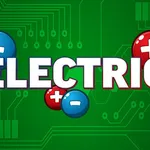
Experience deceptively simple beginnings within this puzzle environment. Players initiate journeys by analyzing static screens filled with polarized nodes. String together positive and negative charges to ignite boards. Early stages lull gamers into comfortable rhythms of straightforward pathfinding.
Mastering fundamental connection mechanics requires zero hesitation during initial layouts. Gamers quickly learn every single node demands a partner. Leaving any particle stranded results in immediate failure within the Electro.io universe.
- Charge Identification: Visually distinguish between plus and minus symbols instantly.
- Direct Routing: Form shortest possible bridges between adjacent nodes.
- Board Assessment: Scan entire perimeters before committing initial links.
Many novices underestimate complexity lurking behind minimalist Electro.io visual design. Progressing forward, developer friv.ee strips away obvious solutions. Playing the Electro.io web game demands increasing levels of spatial foresight.
Transitioning into mid-game territories renders basic strategies obsolete. Players suddenly face dense clusters blocking optimal routes. Surviving the Electro.io puzzle game requires adapting cognitive approaches rapidly.
Understanding Positive and Negative Nodes
Every successful circuit relies on polar opposites. Engaging with the Electro.io interface means constantly scanning for complementary pairs. Physically click and drag cursors to establish vital energy tethers.
Failing to match correct polarity immediately snaps wires. The Electro.io engine strictly enforces this fundamental physics law. Internalize binary relationships to conquer the Electro.io digital arena.
"Always map out outermost connections first. Securing the perimeter in Electro.io prevents boxing yourself into inescapable corners during final moves."
The No-Overlap Constraint
Crossing streams triggers instant resets. Core difficulty of the Electro.io experience revolves around unforgiving spatial limitations. Brute-forcing paths across screens remains impossible.
Each drawn line acts as solid physical barriers. Navigating grids demands treating previous moves as hazardous obstacles. This mechanic transforms simple matching tasks into rigorous Electro.io spatial reasoning tests.
The Hidden Trap of Overlapping Paths
Mid-level layouts introduce severe structural bottlenecks. The Electro.io level design intentionally forces navigation through impossibly tight corridors. One miscalculated drag completely severs access to remaining nodes.
Advanced puzzle solving demands reverse engineering. Identify most isolated charges instead of starting from obvious pairs. The Electro.io architecture punishes impulsive actions with immediate dead ends.
- Locate heavily obstructed particles on the board.
- Trace hypothetical escape routes using visual scanning.
- Execute surrounding connections leaving critical paths open.
Players often find themselves one link away from victory, realizing initial moves doomed entire sequences. The Electro.io challenge loop thrives on frustratingly close encounters. Constantly evaluate collateral damage of every drawn wire.
Overcoming the Electro.io overlapping trap requires immense patience. Rushing through the Electro.io stages guarantees tangled messes of broken circuits. Methodical planning separates casual clickers from true Electro.io masters.
Spatial Planning and Grid Awareness
Visualize invisible grids dictating node placements. Playing fields operate on strict geometric principles. Recognizing hidden alignments allows threading lines through microscopic gaps.
Corner nodes present highest risks of isolation. Securing extremities early prevents catastrophic failures later in the Electro.io session. Master Electro.io connection mechanics by prioritizing outer edges.
- Corner First Protocol: Link isolated corner nodes before addressing center masses.
- Parallel Routing: Run lines alongside each other maximizing remaining open space.
- Choke Point Identification: Spot narrow gaps reserving them for critical final wires.
Closing the Final Loop
Final connections often require massive detours. Wrapping lines around entire perimeters becomes a standard Electro.io late-game maneuver. Preserve outer boundary space specifically for this purpose.
Completing circuits triggers deeply satisfying visual confirmations. Feedback loops reward meticulous planning with bright, unified boards. This dopamine hit drives motivation for the next Electro.io challenge.
The Moving Particle Gauntlet
Higher levels introduce terrifying new variables. The Electro.io moving electrons completely shatter static planning strategies. Nodes drift across screens, altering geometric landscapes in real-time.
Relying solely on patient observation fails here. The Electro.io dynamic mechanics force executing connections while targets remain in motion. Executing the Electro.io puzzle game suddenly requires twitch reflexes.
"Do not chase moving targets. Wait for particles to drift into favorable positions near static nodes, then strike quickly to secure the Electro.io connection."
Tracking multiple moving targets induces severe cognitive overload. The Electro.io difficulty spike separates veterans from amateurs. Predict trajectories successfully to beat Electro.io moving electrons.
Failing anticipation results in accidental overlaps. Hitboxes remain unforgiving, punishing sloppy drags instantly. Precision and timing become incredibly valuable assets during toughest Electro.io stages.
Dynamic Electron Interactions
Moving charges physically block established paths. Engines calculate collisions on the fly. Time drags perfectly to slip between orbiting particles.
Some nodes move in predictable geometric patterns. Observing orbital loops reveals brief windows of opportunity. Exploit gaps advancing through complex layouts.
- Study movement patterns for three full cycles.
- Identify moments of maximum clearance between moving nodes and static obstacles.
- Execute connections swiftly before windows close.
Timing and Execution Strategy
Hesitation during dynamic levels equals death. Advanced Electro.io gameplay strategy emphasizes decisive mouse movements. Commit to paths and drag with absolute confidence.
Practicing flick accuracy heavily improves success rates. Interfaces respond perfectly to rapid, precise inputs. Master the Electro.io mechanics dominating later stages.
Circuit Connection Telemetry Data
| Developer Studio | friv.ee |
| Core Mechanic | Polarized Node Linking |
| Failure State | Path Overlapping |
| Level Count | 25 Progressive Stages |
| Late-Game Variable | Dynamic Moving Particles |
Analyzing raw specifications reveals structural elegance. The Electro.io framework relies on minimal variables producing maximum complexity. Every element serves distinct mechanical purposes.
Understanding parameters helps frame mental approaches. Core design philosophies prioritize pure logic over flashy distractions. This focus ensures the Electro.io experience remains timeless.
Input Response Metrics
Engine telemetry shows zero latency during drag operations. Polled input rates guarantee lines follow cursors perfectly. This technical stability prevents unfair deaths.
Hitbox calculations prioritize player intent. Snapping mechanisms activate when cursors enter node proximity. Focus entirely on routing without fighting strict pixel requirements.
- Latency: Near-zero input delay.
- Hitbox Size: Generous node radius.
- Framerate: Smooth 60fps animations.
Progression System Analytics
Difficulty curves scale logarithmically across 25 stages. Early levels introduce mechanics gently before ramping up complexity. Players experience steady cognitive challenges.
Completion rates drop significantly at level 15. Introducing moving variables acts as primary skill filters. Only dedicated players push past this statistical bottleneck.
Strategic Routing and Spatial Awareness
Elite players treat boards like chessboards. The Electro.io spatial puzzle demands thinking five moves ahead. Every drawn line permanently alters available territory.
Developing mental maps of potential routes prevents early mistakes. Environments reward visualizing completed circuits before making single clicks. Cultivating this skill takes dedicated practice hours.
"When stuck, mentally work backward from the most difficult node. This reverse-engineering tactic acts as the ultimate Electro.io problem-solving tool."
Do not fear reset buttons. The Electro.io retry mechanic functions instantaneously, encouraging rapid iteration. Wiping boards clean often represents the best Electro.io strategy.
Experimentation leads directly to spatial breakthroughs. Level layouts frequently contain multiple valid solutions. Finding elegant paths embodies the true joy of Electro.io.
Analyzing the Friv.ee Engine
Developers optimized drag mechanics for seamless execution. The Electro.io input response feels incredibly snappy. Technical polish prevents frustrating deaths caused by input lag.
Hit detection on nodes remains generously forgiving. Engines snap lines to particle centers, smoothing out slight inaccuracies. Focus entirely on Electro.io routing strategy without fighting controls.
- Snap-to-Grid: Lines automatically straighten maintaining clean visuals.
- Instant Feedback: Red flashes indicate invalid overlaps instantly.
- Smooth Scaling: Boards adjust perfectly across different screen sizes.
Iterative Experimentation
Treat every failure as valuable data. Overcoming learning curves requires making mistakes to understand boundaries. Each overlap teaches what to avoid during the next Electro.io attempt.
Building repertoires of standard routing patterns accelerates gameplay. Challenges often remix familiar layouts. Recognizing these Electro.io structural motifs gives massive advantages.
Frequently Asked Questions About Electro.io
How do I deal with the moving electrons in higher levels?
Observe patrol patterns before acting. Wait for moving particles to drift into open areas, then rapidly click and drag connecting them to static nodes. Timing and precision remain essential avoiding crossed paths with other moving elements.
Is there a time limit that forces me to rush my connections?
No, the game provides unlimited time solving each board. Study static layouts indefinitely. Use this freedom mentally mapping out all routes, ensuring you never box yourself into corners before committing initial drags.
What happens if I accidentally cross two drawn lines?
Connections immediately fail snapping back. Engines strictly prohibit overlapping wires. Route new lines around existing obstacles or use retry buttons completely clearing boards planning new sequences.